
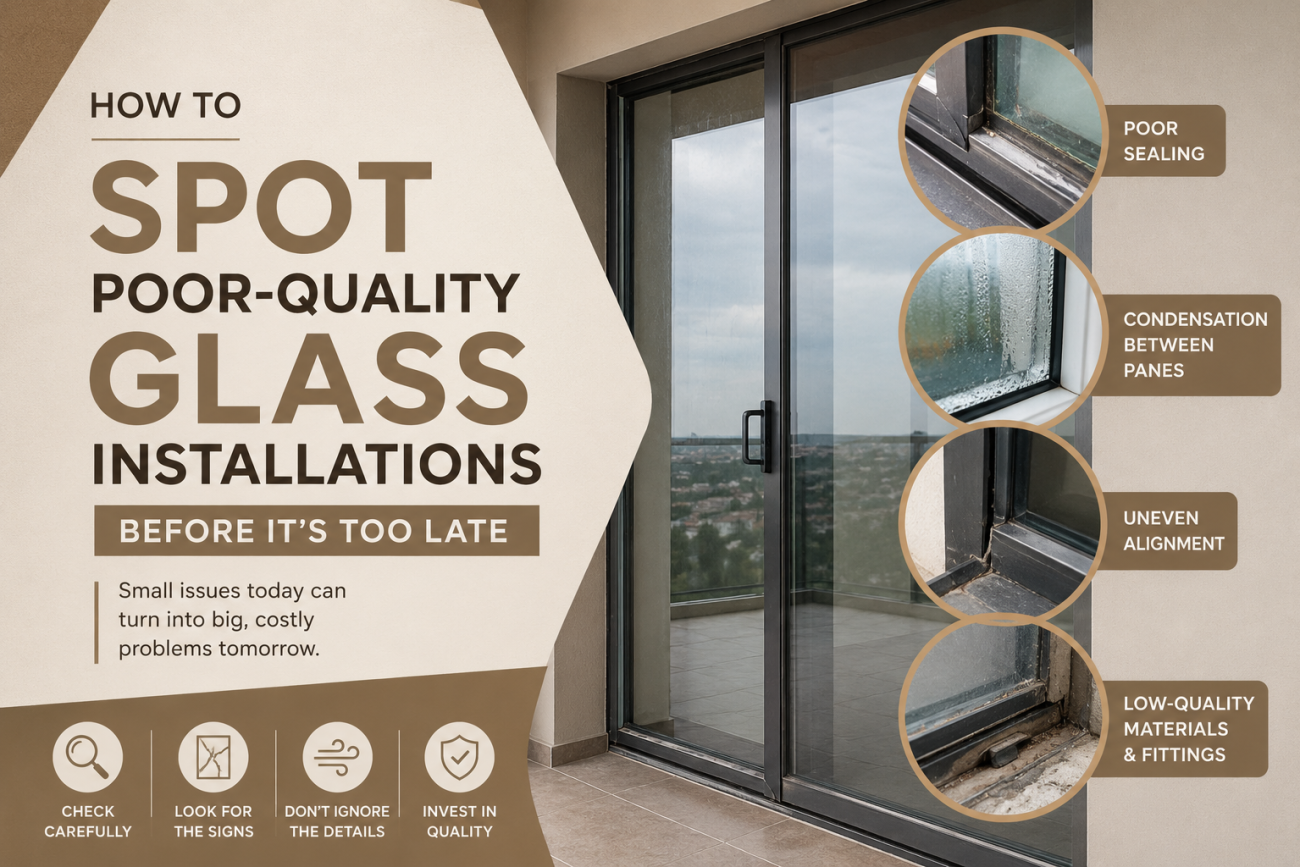
Bad glass work is not always obvious right away. The real problems — leaks, heat loss, weak frames — usually show up months later, after the installer is long gone. Here is what to look out for before you give the go-ahead.
1. Messy or missing sealant
Look along every edge where the glass meets the frame. The sealant should be smooth and even all the way around. If you see gaps, cracks, or thin spots, water will get in — especially when it rains hard.
2. Fog or moisture between the glass panes
If your windows have two or three layers of glass and you can see cloudiness or water droplets trapped between them, the window has already failed. That moisture means the seal is broken and the insulating gas inside has leaked out. The only fix is to replace the glass unit entirely.
3. Frames that look crooked or uneven
Step back and take a good look at the frame once it is fitted. It should sit straight, flat, and level with the wall around it. If it looks twisted, leans to one side, or sticks out, it was either measured wrong or forced into a badly prepared opening. Over time, this puts pressure on the glass and lets in draughts.
4. Windows or doors that stick, rattle, or feel loose
Open and close every window and door after installation. They should move smoothly and close firmly without any rattling or sticking. If the handles feel stiff, or the window shakes when closed, the fitting is off. Hardware that does not line up properly wears out quickly and leaves gaps in the frame.
5. Aluminium frames that feel cold to the touch
If you are getting aluminium frames, ask the installer if they have a thermal break inside. A thermal break is basically a strip of insulating material built into the frame that stops cold from transferring through. Without it, the frame itself will sweat and your heating bills will go up. Any good installer will know exactly what you are talking about.
6. Wavy or distorted reflections in the glass
Hold your phone or a ruler up to the glass and look at the reflection. It should look flat and clear. If the reflection looks wavy or bent, the glass is either too thin for the size of the pane, was stored badly, or is just poor quality material.
One last thing
Always ask your installer to show you their registration or certification before work begins, and verify it yourself. A certified installer has to meet set standards — and if something goes wrong, you have something to fall back on.
It is much easier to flag these problems during or right after the job than to chase them down years later.
