By All Things Aluminium and Glass (ATAG) | Nakuru, Kenya
You’ve chosen the glass. You’ve chosen the frame. But there’s one product that holds everything together , literally. Structural silicone is the unsung hero of every quality glass installation in Kenya, and most homeowners and contractors don’t give it nearly enough thought. In this guide, we explain exactly what it is, why it matters, and why skipping it — or buying the wrong kind — is a costly mistake.
What is Structural Silicone?
Structural silicone is a high-performance adhesive sealant specifically engineered to bond glass panels to aluminium frames, metal structures, and building facades. Unlike standard household silicone — which is used for basic waterproofing around sinks and bathrooms — structural silicone is formulated to carry actual load. It bonds glass to its supporting frame with enough strength to resist wind pressure, thermal expansion, vibration, and the daily stresses of a building in use.
In modern construction, structural silicone is what makes frameless glass installations, curtain wall façades, shopfronts, and large glass panels possible. Without it, the only way to hold glass in place is with mechanical fasteners — clamps, bolts, and visible fixings that break the clean, seamless look that modern architecture demands. Structural silicone eliminates all of that, bonding glass invisibly and permanently to its frame.
Why Kenya’s Climate Makes It Essential
Kenya’s construction environment is harder on building materials than most people realise. Coastal areas like Mombasa deal with high humidity and salt air. The Rift Valley and Nairobi experience intense UV radiation and significant temperature swings between day and night. Nakuru and the highlands face seasonal rains that put constant pressure on seals and joints.
Standard silicone degrades quickly under these conditions — it shrinks, cracks, loses adhesion, and allows water infiltration. Structural silicone is specifically formulated to resist UV radiation, temperature extremes, moisture, and aging — maintaining its bond and flexibility for decades without deteriorating. For any glass installation in Kenya that is meant to last, structural silicone is not optional. It is essential.
Where Structural Silicone is Used
Structural silicone is required in virtually every glass installation beyond a basic putty-set window. The most common applications in Kenya include:
Curtain wall façades — the large glass building skins you see on modern commercial buildings in Nairobi, Nakuru, and across Kenya. Structural silicone holds every glass panel to the aluminium subframe, resisting wind loads and keeping the façade weathertight.
Frameless glass systems — shower cubicles, glass partitions, frameless doors, and glass balustrades all rely on structural silicone to bond glass to minimal hardware without visible mechanical fixings.
Shopfronts and office entrances — large glass panels in commercial entrances need structural silicone to bond securely to the aluminium frame and withstand the daily vibration of high-traffic doors.
Aluminium windows and doors with glass inserts — even standard residential windows benefit from structural silicone at the glass-to-frame joint, providing a weathertight, long-lasting seal that putty alone cannot match.
Structural Silicone vs Regular Silicone — Know the Difference
This is where many Kenyan contractors and homeowners make an expensive mistake. Not all silicone is the same — and using the wrong type in a structural application will result in glass that fails its bond, leaks water, and may eventually become a safety hazard.
| Structural Silicone | Standard Silicone | |
|---|---|---|
| Purpose | Bonding & load-bearing | Sealing & waterproofing |
| Strength | High tensile & shear strength | Low structural strength |
| UV resistance | Excellent — decades | Poor — degrades in 2–5 years |
| Temperature range | Very wide | Moderate |
| Flexibility | Remains flexible permanently | Hardens and cracks over time |
| Best for | Glass facades, curtain walls, frameless glass | Bathroom seals, kitchen joints |
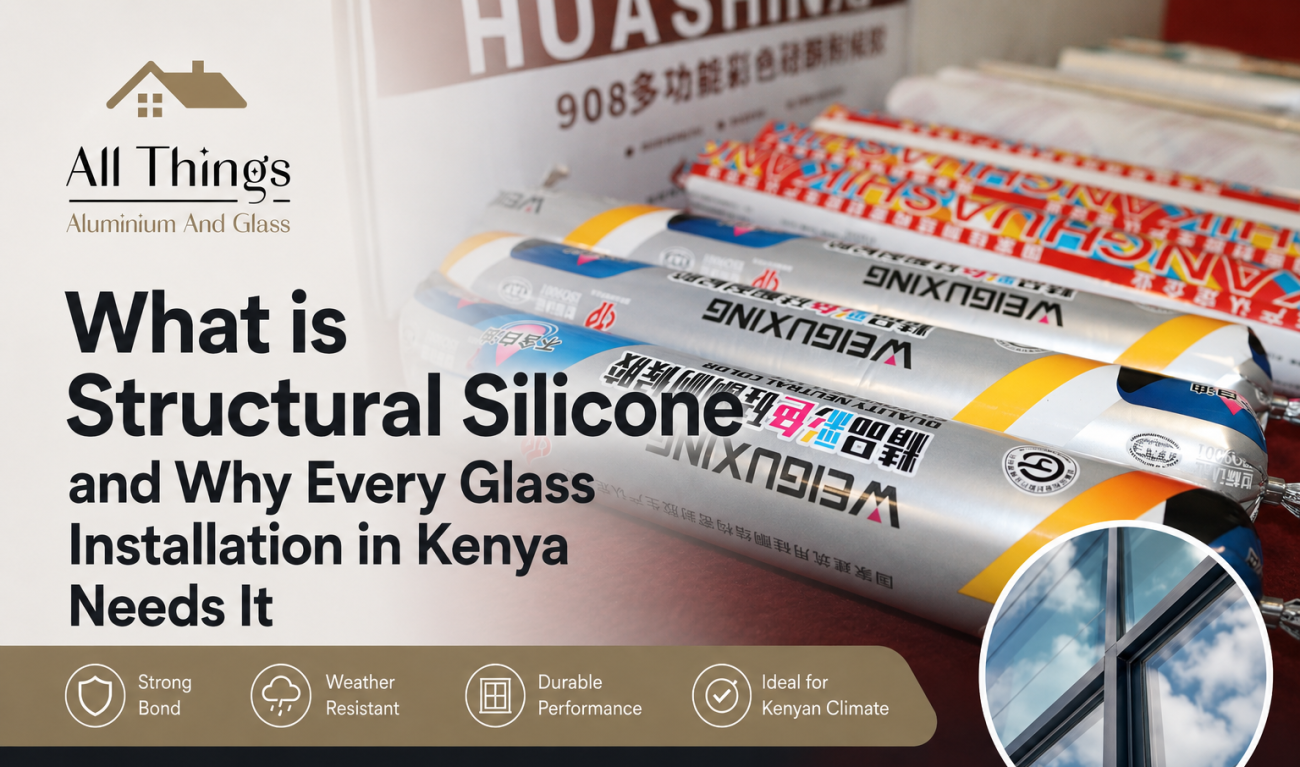
At ATAG, we stock and use Structural Silicone — a quality neutral-cure structural silicone available in multiple colours, at KSh 500 per piece.
5 Signs Your Glass Installation Used the Wrong Silicone
Watch out for these warning signs that sub-standard or wrong silicone was used in your glass installation:
- Yellowing or discolouration around the glass edges within 1–2 years
- Gaps or cracking in the silicone joint — especially after the first rainy season
- Water leaking around window or glass panel edges during rain
- Glass movement or rattling in the frame — the bond has failed
- Peeling silicone pulling away from either the glass or the frame
If you notice any of these, contact ATAG immediately — early intervention is far cheaper than glass replacement.
Why Choose ATAG for Your Structural Silicone Needs
At All Things Aluminium and Glass, we supply quality structural silicone alongside all our glass and aluminium products — and our installation team uses it correctly on every project we complete. Whether you are a homeowner, a contractor sourcing materials, or a developer managing a large commercial build, we have the product and the expertise you need.
Structural Silicone — available now at ATAG:
- KSh 500 per tube
- Multiple colours available
- Wholesale pricing for bulk orders
📍 Kolen Stage, Off Nakuru–Eldoret Road, Next to Timbecraft, Nakuru 📞 Call/WhatsApp: 0714 262 252 🌐 www.allthingsaluminium.co.ke
You Dream It, We Build It.
© 2026 All Things Aluminium and Glass. All rights reserved.
