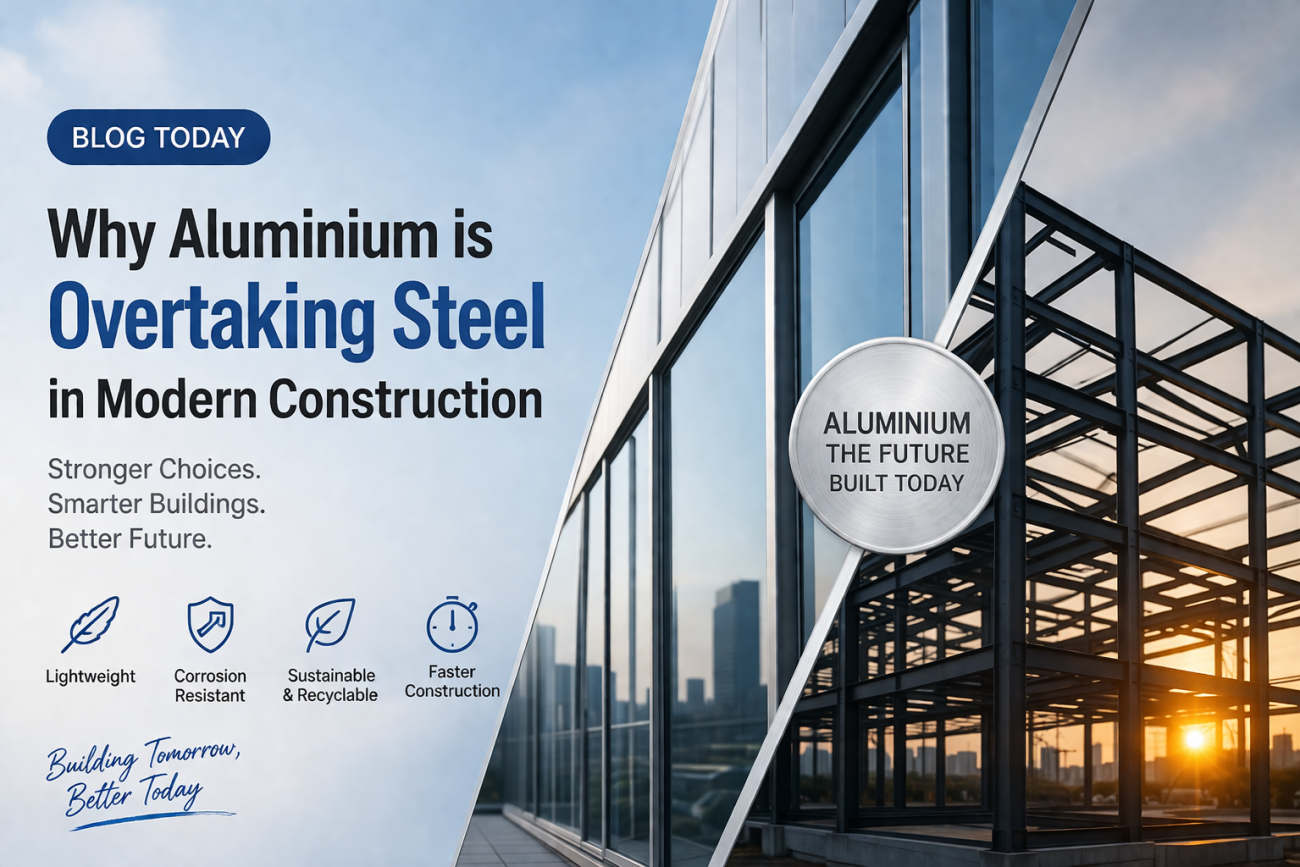
The construction industry is rapidly evolving, and material selection is becoming more important than ever. Traditionally, steel dominated structural and architectural applications. However, in modern construction, aluminium is increasingly overtaking steel as the preferred material for windows, doors, façades, curtain walls, and lightweight structural systems.
So, why is aluminium becoming the future of construction materials? Let’s break it down.
1. Aluminium vs Steel: Weight Advantage in Construction
One of the biggest reasons aluminium is replacing steel in modern construction is its lightweight nature.
Aluminium is approximately three times lighter than steel, yet it still offers excellent structural strength. This makes it easier to:
- Transport materials to site
- Handle and install components
- Reduce labour and machinery costs
- Speed up construction timelines
In large-scale projects, this weight advantage significantly improves efficiency.
2. Superior Corrosion Resistance for Long-Term Durability
Unlike steel, aluminium does not rust. Instead, it forms a natural protective oxide layer that prevents corrosion.
This makes aluminium ideal for:
- Coastal buildings
- High humidity environments
- Outdoor structures
- Window and door systems
Steel often requires galvanization or protective coatings, which increase both maintenance costs and long-term upkeep.
3. Low Maintenance Aluminium Construction Materials
One of the key benefits driving aluminium adoption is low maintenance requirements.
Aluminium structures:
- Do not require frequent repainting
- Resist rust and weather damage
- Maintain appearance for longer periods
This results in lower lifecycle costs compared to steel-based systems.
4. Modern Architectural Design and Aesthetic Appeal
Modern architecture prioritizes:
- Slim profiles
- Minimalist design
- Large glass surfaces
- Clean finishes
Aluminium enables thin yet strong framing systems, making it perfect for:
- Aluminium windows
- Aluminium doors
- Curtain wall systems
- Glass partitions and façades
Steel frames are generally bulkier, limiting design flexibility.
5. Aluminium is a Sustainable and Recyclable Building Material
Sustainability is a major factor in modern construction trends.
Aluminium is:
- 100% recyclable
- Reusable without losing quality
- Energy-efficient in lifecycle use
This makes it a preferred choice in green building and eco-friendly construction projects.
6. Design Flexibility and Custom Aluminium Profiles
Aluminium is highly flexible and can be easily extruded into various shapes and profiles.
This allows architects and engineers to create:
- Custom window systems
- Complex façade designs
- Innovative architectural structures
Steel is stronger in heavy structural use, but less flexible in design applications.
7. Faster Installation and Reduced Construction Time
Because aluminium is lightweight and modular, installation is faster compared to steel systems.
This leads to:
- Shorter project timelines
- Reduced labour costs
- Improved on-site efficiency
For developers, this directly improves project delivery speed.
Conclusion: Why Aluminium is Replacing Steel in Modern Construction
While steel remains essential for heavy structural frameworks, aluminium is clearly dominating modern architectural and finishing applications.
Its advantages in weight, durability, design flexibility, sustainability, and cost efficiency make it the preferred material for modern construction projects in 2026 and beyond.
As construction trends continue to evolve, aluminium is no longer just an alternative—it is becoming the standard material for modern building systems.
