
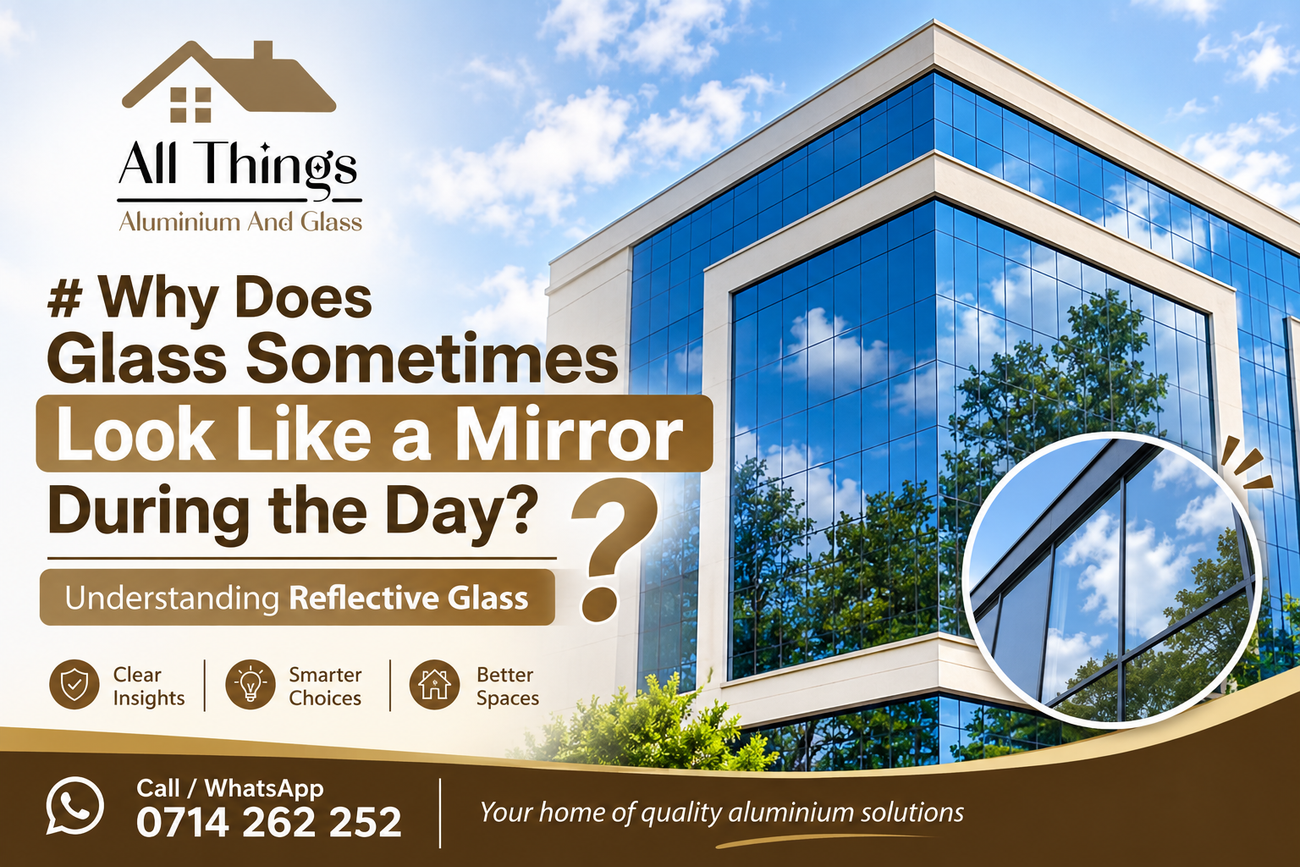
Have you ever walked past a modern office building or residential property and noticed that its windows look like mirrors from the outside, reflecting the surrounding buildings, trees and sky?
Yet, from inside the building, occupants can still see what is happening outside.
This is not ordinary clear glass. It is commonly known as reflective glass or one-way glass, and it is increasingly used in modern architectural designs to combine aesthetics, natural lighting and daytime privacy.
But how does it actually work? Why does it look like a mirror from one side? And does it provide privacy at all times?
Let’s explore.
1. What Is Reflective Glass?
Reflective glass is a type of architectural glass manufactured with a special reflective coating that reduces the amount of light and solar energy passing through it.
The coating reflects a portion of the incoming light, giving the glass its distinctive mirror-like appearance when viewed from the brighter side.
Depending on the glass specification, reflective glass is available in different colours and finishes, including bronze, grey, blue and other reflective shades.
It is commonly used in:
- Commercial office buildings.
- Residential windows.
- Shopping malls and retail buildings.
- Glass curtain wall installations.
- Modern architectural facades.
- Hotels and other commercial properties.
Apart from its distinctive appearance, reflective glass can help manage glare and solar heat gain, depending on its specification and installation.
2. Why Does Reflective Glass Look Like a Mirror During the Day?
The secret behind reflective glass is the difference in lighting intensity between the two sides of the glass.
During the day, the outdoor environment is usually much brighter than the interior of a building.
The reflective coating reflects a significant portion of the outdoor light, making the glass appear mirror-like to someone standing outside.
At the same time, because the interior is relatively darker, people inside may be able to see through the glass towards the brighter outdoor environment.
This creates the familiar effect where people outside see reflections while occupants inside can see outside.
An important point: Reflective glass does not completely block visibility from one side. Its privacy effect depends largely on the difference in lighting conditions.
3. Does One-Way Glass Provide Privacy at Night?
This is one of the most important things to understand before choosing reflective glass for your property.
Reflective glass does not guarantee privacy around the clock.
During the day, the brighter outdoor environment generally creates the mirror effect. However, at night, when interior lights are switched on and the outside becomes darker, the lighting balance reverses.
People outside may then be able to see into the building more easily.
This means that if you are installing reflective glass in bedrooms, offices or living spaces where privacy is important, you may need additional privacy solutions such as curtains, blinds or other window coverings.
Remember: One-way glass provides a lighting-dependent privacy effect, not permanent one-way visibility.
4. What Is the Difference Between Clear Glass and Reflective Glass?
Although both types of glass allow natural light into a building, they have different appearances and functional characteristics.
| Feature | Clear Glass | Reflective Glass |
|---|---|---|
| Appearance | Transparent | Mirror-like exterior appearance |
| Visibility | Generally transparent from both sides | Visibility varies with lighting |
| Privacy | Limited during the day | Offers daytime privacy under suitable lighting conditions |
| Sunlight | Allows substantial visible light through | Reflects some incoming light |
| Aesthetic appeal | Simple and transparent | Modern and distinctive |
| Applications | Windows, doors and partitions | Building facades, windows and commercial properties |
The right choice depends on the building’s design, privacy requirements, lighting conditions and performance specifications.
5. Does Reflective Glass Reduce Heat Inside a Building?
Reflective glass can help reduce solar heat entering a building by reflecting part of the incoming solar energy.
This can be particularly useful in buildings with large glass windows or extensive glazed facades.
However, not all reflective glass performs equally.
Its solar heat control performance depends on factors such as:
- The type and quality of the reflective coating.
- Glass thickness and construction.
- Solar energy transmittance.
- Visible light transmittance.
- The orientation of the building.
- The overall glazing system.
When selecting reflective glass, it is important to consider both its appearance and its technical performance.
For projects where temperature control is a priority, request the relevant manufacturer performance specifications rather than choosing glass based on colour alone.
6. Where Can You Use Reflective Glass?
Reflective glass offers several possibilities for residential and commercial construction.
Commercial office buildings
It creates a clean, modern exterior while helping manage glare and solar exposure.
Residential properties
It can give homes a contemporary appearance while offering daytime privacy under suitable lighting conditions.
Glass curtain walls
Reflective glass is popular in commercial facades where developers want a consistent, modern exterior finish.
Shopping centres and commercial spaces
It can enhance the appearance of retail buildings while contributing to the overall architectural design.
Large windows and glazed facades
It provides an alternative to ordinary clear glass where a reflective finish is desired.
7. What Should You Consider Before Buying Reflective Glass?
Before selecting reflective glass for your construction project, consider the following:
- Colour preference: Choose a finish that complements your building’s architectural design.
- Thickness: Select an appropriate glass thickness based on the application and design requirements.
- Privacy requirements: Remember that reflective glass does not guarantee privacy at night.
- Solar performance: Consider the amount of sunlight and heat you want to control.
- Installation requirements: Ensure the glass is correctly specified and installed for its intended application.
- Safety requirements: Where safety glazing is required, ensure the selected glass meets the applicable requirements. A reflective coating alone does not make ordinary glass safety glass.
Working with a knowledgeable glass supplier can help you identify the right specification for your project.
8. Looking for Quality Reflective Glass in Kenya?
At All Things Aluminium & Glass, we supply a range of glass products and aluminium solutions for residential, commercial and construction projects.
Our glass range includes:
- 4mm and other available thicknesses of Bronze One-Way Glass.
- Blue One-Way / Reflective Glass.
- Grey One-Way / Reflective Glass.
- Tinted Glass.
- Frosted Glass.
- Clear Glass.
- Other glass options depending on availability and project requirements.
Whether you are an architect, contractor, property developer, glass fabricator, hardware shop or homeowner, we can assist with your glass supply requirements.
We offer wholesale and retail supply, with solutions for customers across Kenya.
Need reflective glass for your next project?
Get in touch with All Things Aluminium & Glass today.
📞 Call/WhatsApp: 0714 262 252
🌐 Website: https://allthingsaluminium.co.ke/
All Things Aluminium & Glass – You Dream It, We Build It.
