
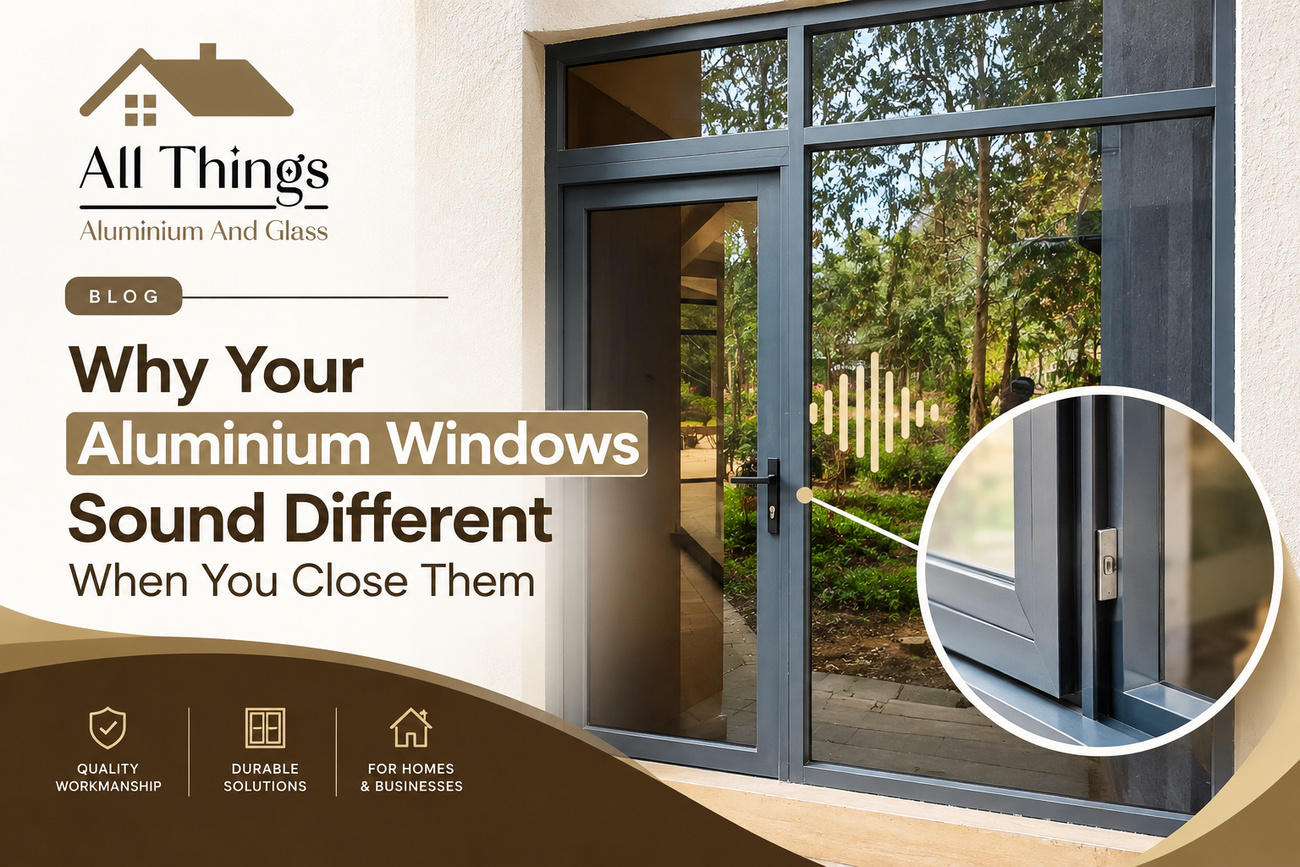
That sound when you close an aluminium window isn’t just a sound. It can tell you something about how the window was made, fitted and installed.
Have you ever noticed that some aluminium windows close with a smooth, solid sound, while others rattle, shake or make a sharp metallic noise?
It is easy to ignore.
After all, a window is supposed to open and close. If it does that, what could possibly be wrong?
Quite a lot.
The way an aluminium window moves, closes and sounds can sometimes reveal details about its fabrication, hardware, alignment and installation. While sound alone cannot determine whether a window is good or bad, unusual rattling, excessive vibration or difficulty closing are worth paying attention to.
1. A window should move smoothly
One of the first things to notice is how the window moves.
A properly fitted sliding window should generally move smoothly along its track without requiring excessive force. If you have to push, pull or lift the sash just to get it moving, something may need attention.
Stiff movement can be associated with several factors, including:
- Poor alignment
- Dirt or debris in the track
- Worn or unsuitable rollers
- Incorrect installation
- A frame that is not properly positioned
The same applies to hinged aluminium windows and doors. They should open and close without unnecessary resistance.
2. That rattling sound may have a reason
A slight sound when a window closes is normal. Aluminium and glass are materials, and movement naturally creates some noise.
However, persistent rattling is different.
If the window shakes noticeably when closed, the cause could be related to loose components, fittings, hardware, glass positioning or the way the frame has been installed.
This is why the sound should be considered together with what you can actually feel and see.
Does the glass move excessively?
Does the frame shake?
Does the handle feel loose?
Does the window sit properly when closed?
These small observations can help identify whether the window needs adjustment or professional attention.
3. The hardware matters more than you think
When people choose aluminium windows, most of the attention goes to the profile colour, glass and overall design.
But some of the smallest components have a big effect on how the finished window feels.
Rollers, handles, locks, hinges, seals and other fittings all contribute to the operation of the window.
For sliding windows, for example, the rollers play an important role in how smoothly the sash travels along the track.
For hinged windows and doors, hinges and locking mechanisms affect how easily the unit opens, closes and locks.
Good fabrication is therefore not only about making the frame look good. It is also about getting the details right.
4. Alignment makes a difference
Imagine installing a perfectly designed window into an opening that isn’t properly aligned.
The window may look beautiful, but its operation can tell a different story.
Correct alignment helps the moving parts meet where they are supposed to. When a window is not properly aligned, you may notice uneven gaps, difficult locking, rubbing or unusual movement.
This is one reason professional measurement and installation matter.
The quality of an aluminium window is not determined by the frame alone. The final result depends on how the different parts come together.
5. Glass should sit securely
Glass is another important part of the equation.
When glass is correctly fitted and supported within the frame, it should feel secure during normal operation.
Excessive movement or vibration deserves attention because it can indicate an issue with the glazing, fittings or installation.
Different glass types and thicknesses also have different characteristics, which is why choosing glass should not be based on appearance alone.
The right choice depends on the application, size, design and intended u
